15 min
Uluru Helicopter Flight
- Private experience
- Personal attention
- Premium amenities
- Free cancellation
Uluru Sunset Helicopter Tour — Aerial Flights Over the Red Centre
Rise above the desert floor, trace the ridges lit crimson.
Compare fares, pick the fit — all bookings are mobile-voucher and eligible for free cancellation where shown.
15 min
5 hr
5 hr
Selecting the right uluru sunset helicopter tour involves balancing your available time with the desire to view both iconic desert landmarks. These aerial excursions provide distinct perspectives of the vast landscape within Uluru-Kata Tjuta National Park.
| 15-Minute Experience Quick aerial overview |
Top pick 25-Minute Experience Uluru and Kata Tjuta |
36-Minute Sunset Extended grand view | |
|---|---|---|---|
| Flight Duration | 15 minutes | 25 minutes | 36 minutes |
| Landmarks Included | Uluru | Uluru and Kata Tjuta | Uluru and Kata Tjuta |
| Best Time | Anytime | Anytime | Sunset |
| Inclusions | Pilot commentary and transfers | Pilot commentary and transfers | Pilot commentary and transfers |
| Best for | Time-conscious visitors | First-timers | Photography enthusiasts |
| See tickets & prices |
Verdict: First-time visitors often find that the 25-minute uluru sunset helicopter tour tickets offer the best balance of time and landmark coverage.
Worth it for aerial perspective seekers
A Uluru sunset helicopter tour delivers an unmatched vantage point that ground-based options cannot replicate. The Uluru Helicopter Flight lifts you above the iconic monolith and neighboring Kata Tjuta formations, revealing geological patterns and scale invisible from the base. Sunset timing transforms the Rock's iron-rich surface through a spectrum of reds and oranges, a phenomenon best appreciated from altitude where shadows and light play across the entire formation simultaneously. The value proposition hinges on whether aerial photography and a bird's-eye perspective justify the premium over ground tours like the Uluru Sacred Sites & Sunset Experience or the Base Walk at Sunrise. For photographers chasing unique angles or visitors with limited mobility who cannot complete walking trails, helicopter tours solve real constraints. If your priority is cultural immersion or extended time at sacred sites, ground-based alternatives offer deeper engagement at lower cost. The flight duration is brief, so it's an add-on experience rather than a standalone visit.
Bottom line: Book the helicopter if aerial perspectives and photography matter more than ground-level sacred site access.
They complement each other; most visitors who do both call the uluru sunset helicopter tour the more thrilling, while the viewing area provides a classic communal atmosphere.
|
Top pick Helicopter Tour |
Sunset Viewing Area | |
|---|---|---|
| Perspective | Aerial panoramic view | |
| Duration | 15–36 minutes flight | |
| Intensity | High adrenaline | |
| Group size | Private or small groups | |
| Price | From 230 AUD | |
| Booking | Required in advance | |
| Suitability | Photography & thrill-seekers | |
| See tickets & prices |
Verdict: Choose the uluru sunset helicopter tour tour if you prioritize a unique perspective and speed, but rely on uluru sunset helicopter tour tickets for your primary sightseeing plans if you prefer a budget-friendly way to enjoy the sunset on the ground.
Hand-picked experiences loved by thousands of travelers
5.5 hours
Free Cancellation
Circle the sacred monolith at first light, hear ancient stories, and witness a desert waterfall
5 hours
Free Cancellation
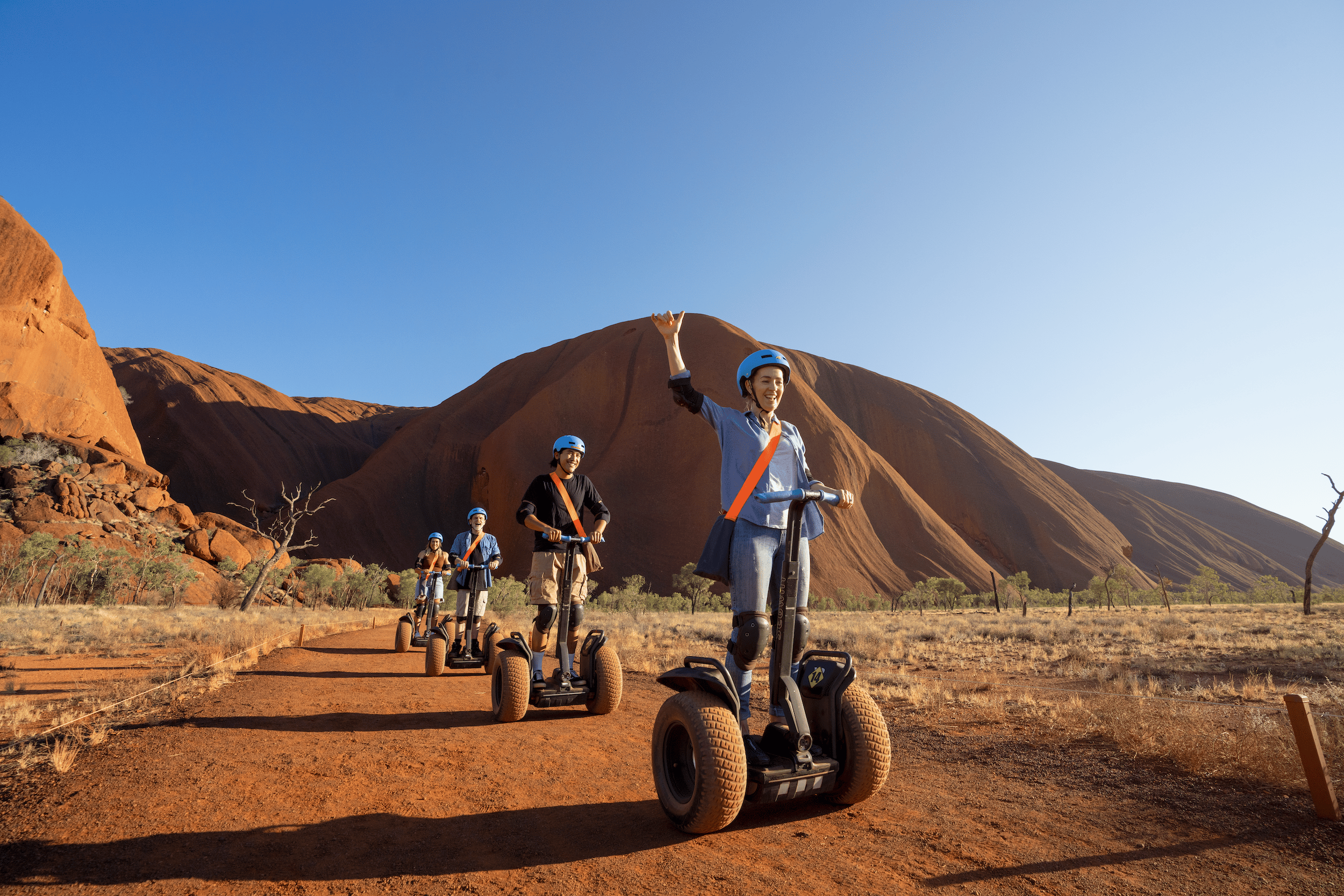
Glide around the sacred rock at first light on a fully guided Segway journey with cultural insight.
5 hours
Free Cancellation
Intimate guided journey around the sacred monolith, including waterhole visit, rock art, and sunset viewing with sparkling wine
7 hours
Free Cancellation
Discover the sacred heart of Australia with guided walks, ancient stories, and a spectacular sunset feast
2 hours
Free Cancellation
Watch the iconic rock transform through spectacular color shifts as daylight fades in Australia's Red Centre
2 hours
Free Cancellation
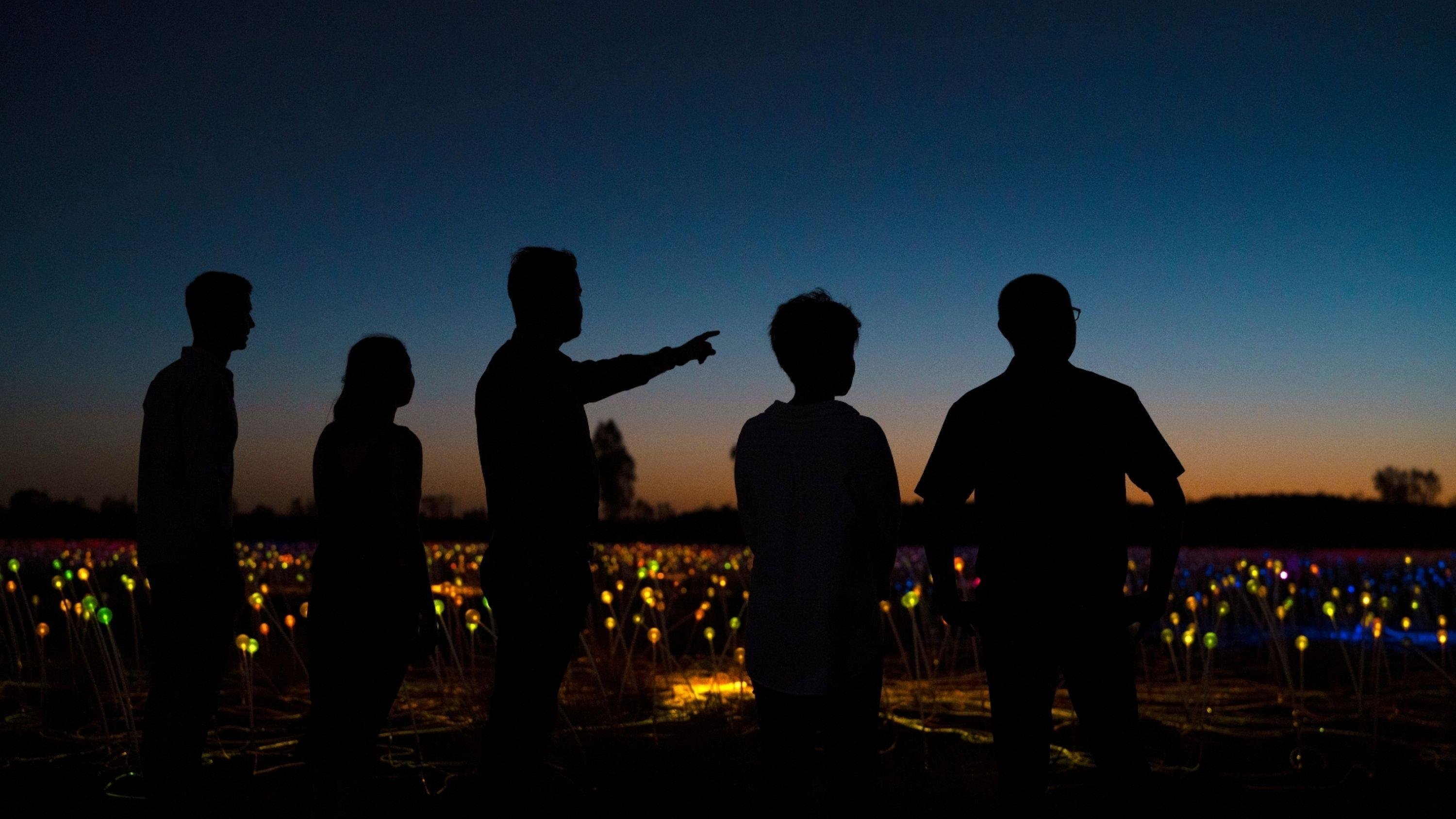
Watch 50,000 illuminated spheres glow across the desert as dawn breaks over the Red Centre
3 hours 31 minutes
Free Cancellation
Watch the sacred rock transform at dusk, then feast on kangaroo and steak beneath the southern stars
5 hours
Free Cancellation
Witness dawn break over ancient domed rock formations in Australia's Red Centre on this exclusive morning tour
Verify booking and weight requirements
Orientation for the flight
Flight over Uluru and Kata Tjuta
Return to heliport
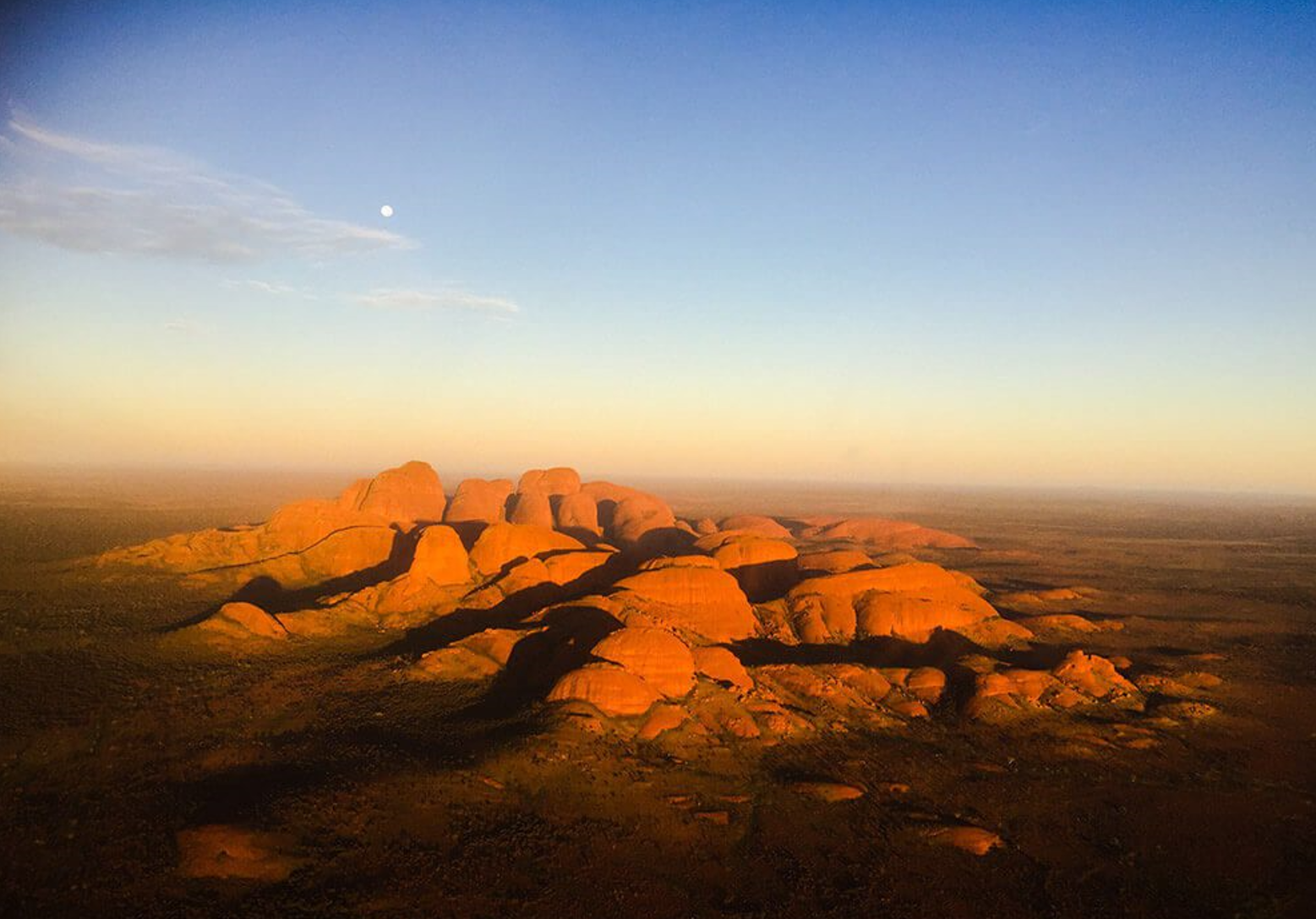
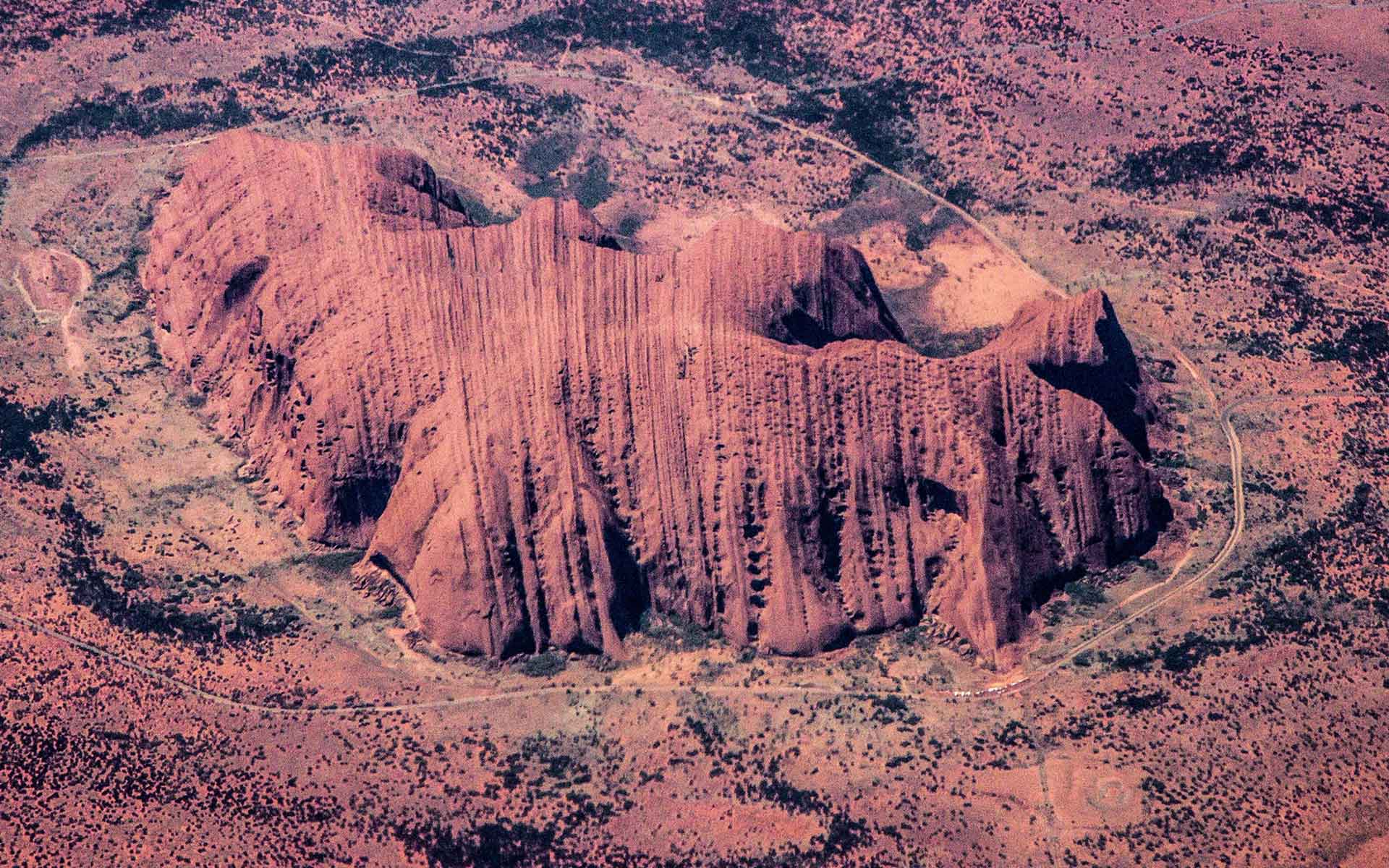
The iconic sandstone monolith stands 348 meters high. Its color changes dramatically during the sunset hours
Uluru aerial photography
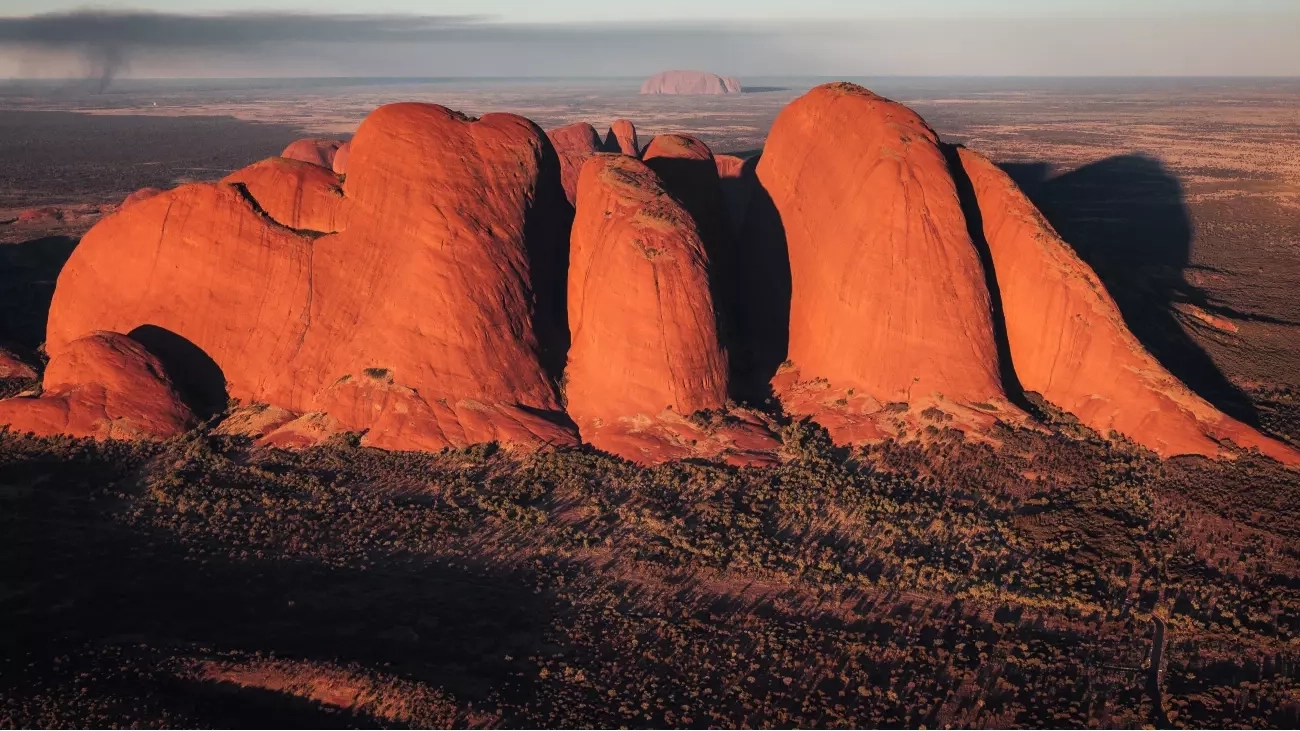
These 36 steep-sided domes cover an area of 21 square kilometers. The largest dome is over 500 meters tall
Kata Tjuta landscape photography
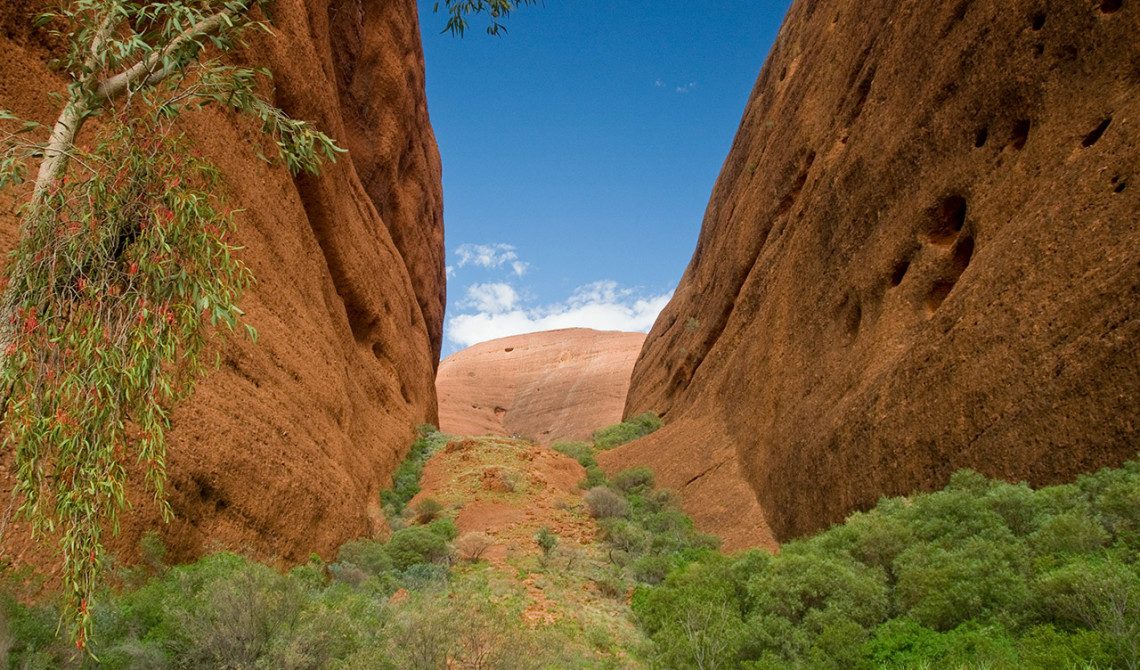
A series of trails through the massive rock formations of Kata Tjuta. It remains a significant site for traditional owners
Valley of the Winds aerial
You check in at the aviation desk 30 minutes before departure, present your voucher, and step onto the scale—pilot protocol for weight distribution. The Bell or Robinson helicopter idles on the apron, rotors already turning, and you duck low as you approach.
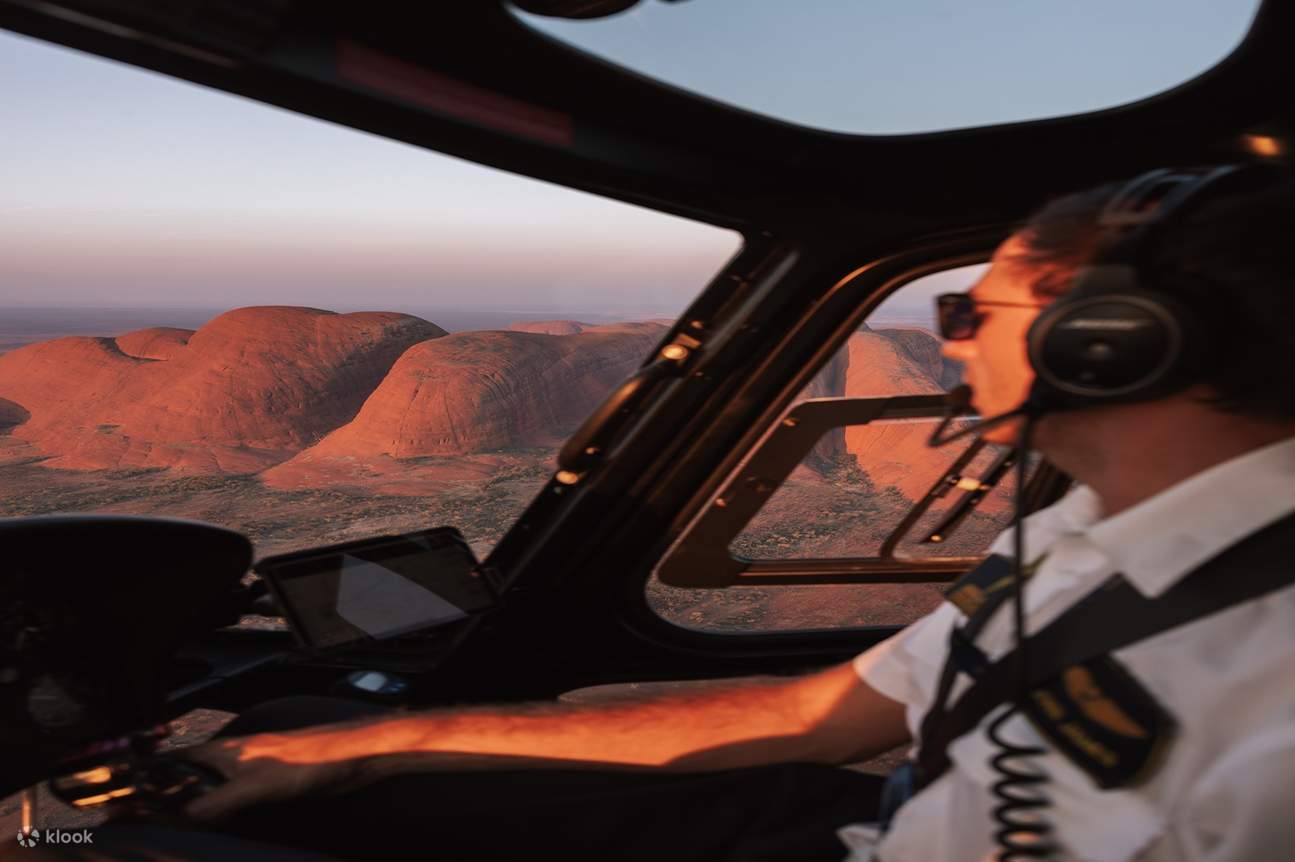
Once strapped in, the pilot hands you noise-cancelling headsets and runs through the safety brief: exits, seatbelts, camera-strap protocols. The aircraft lifts vertically, nose dipping as it banks south.
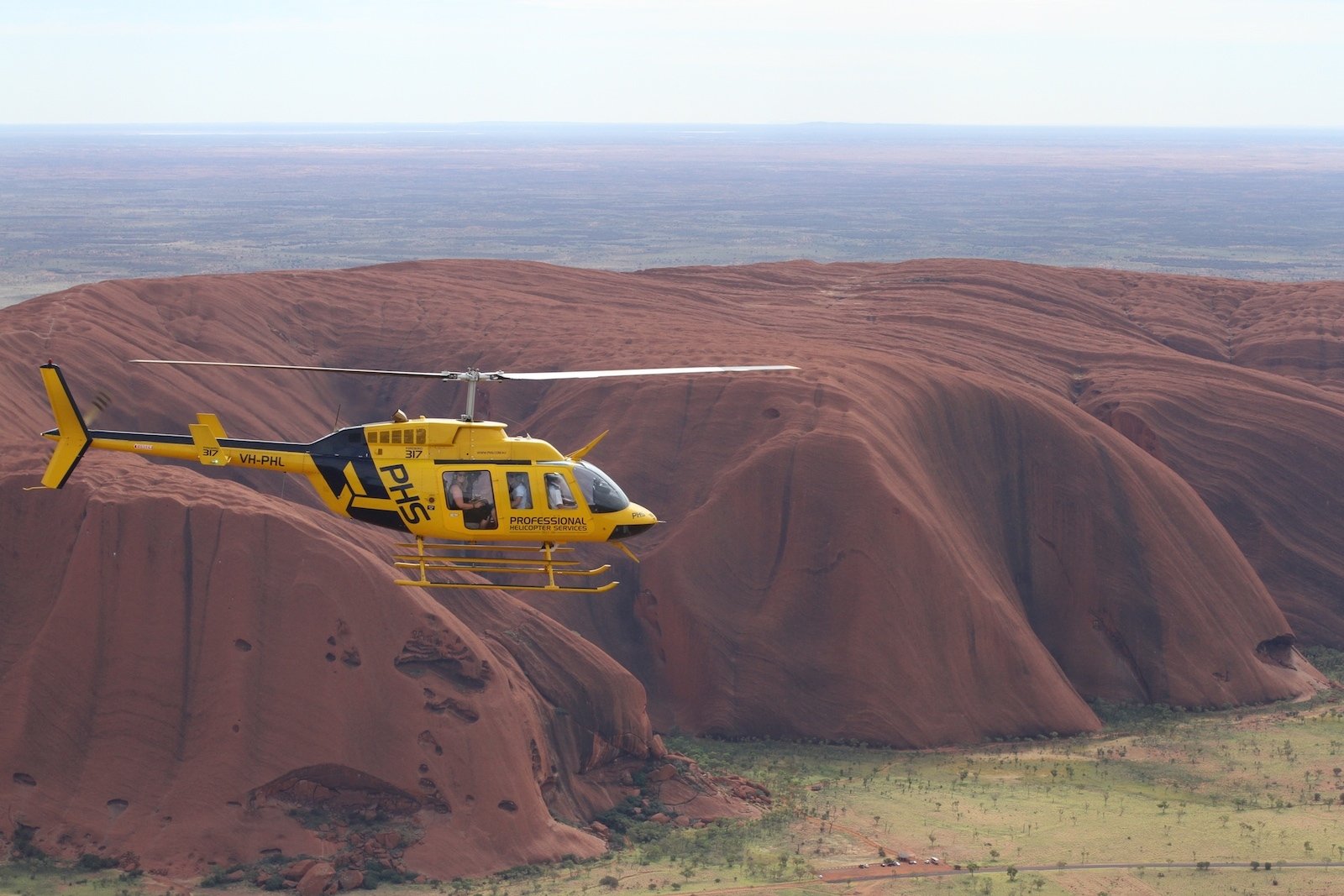
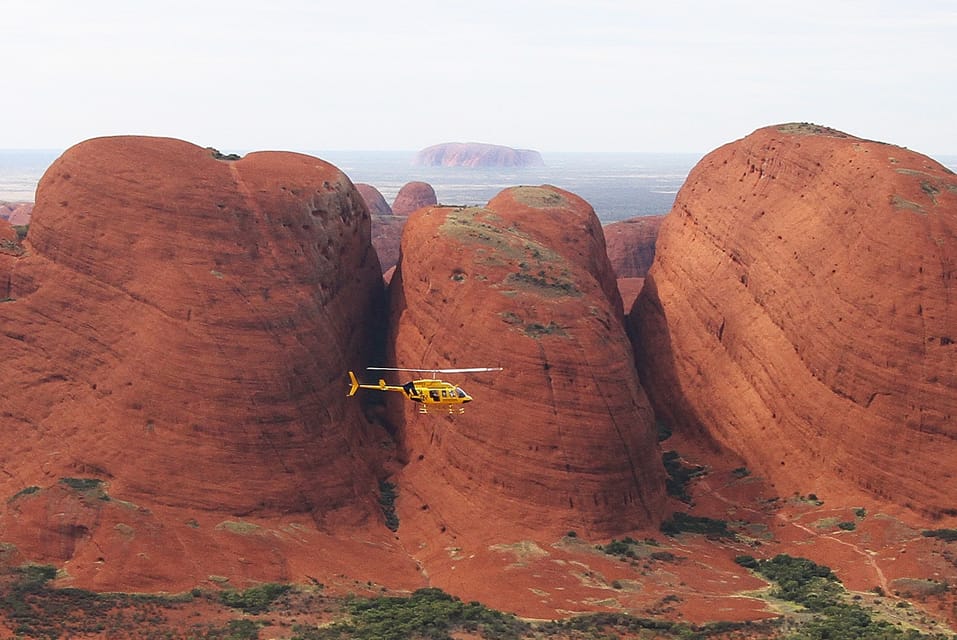
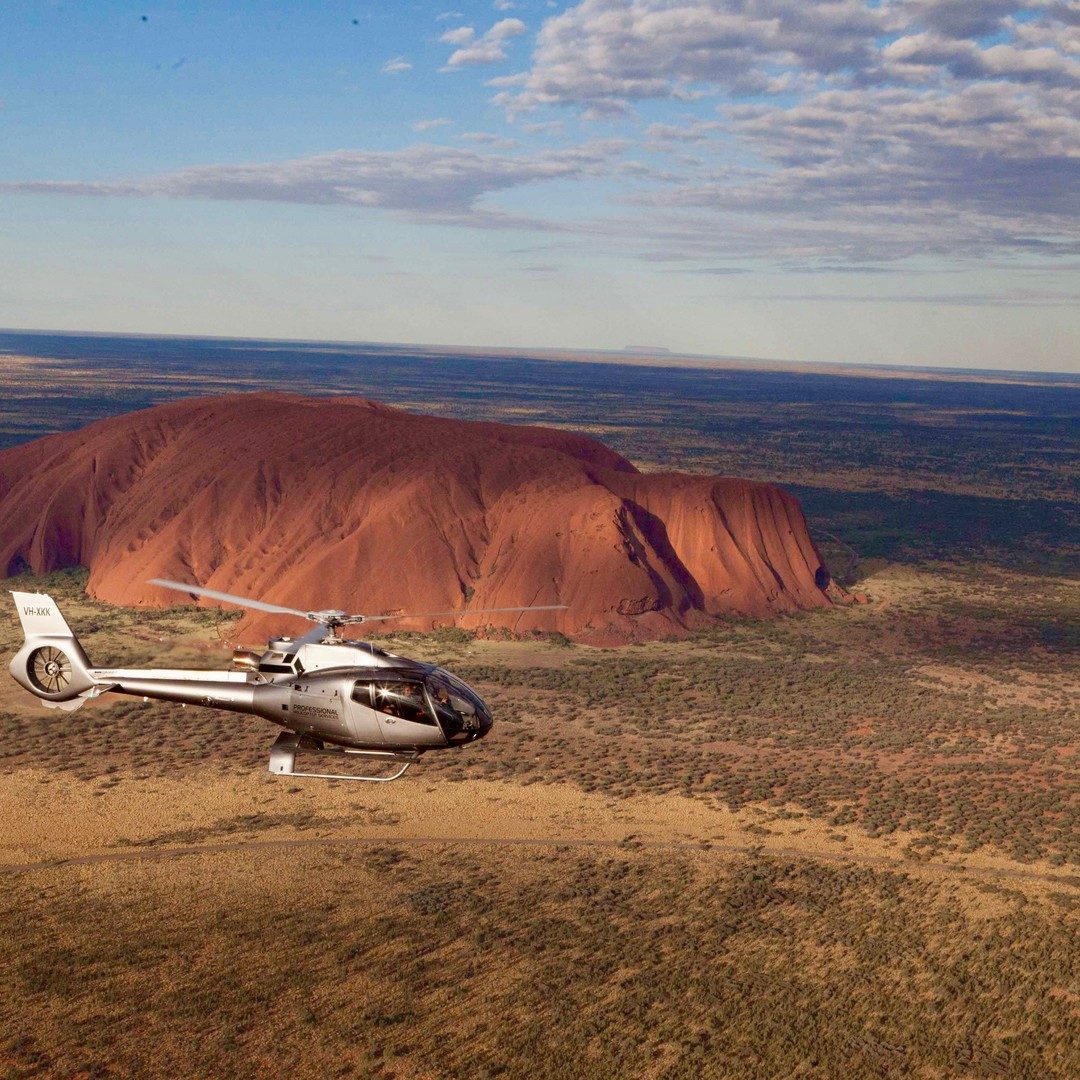
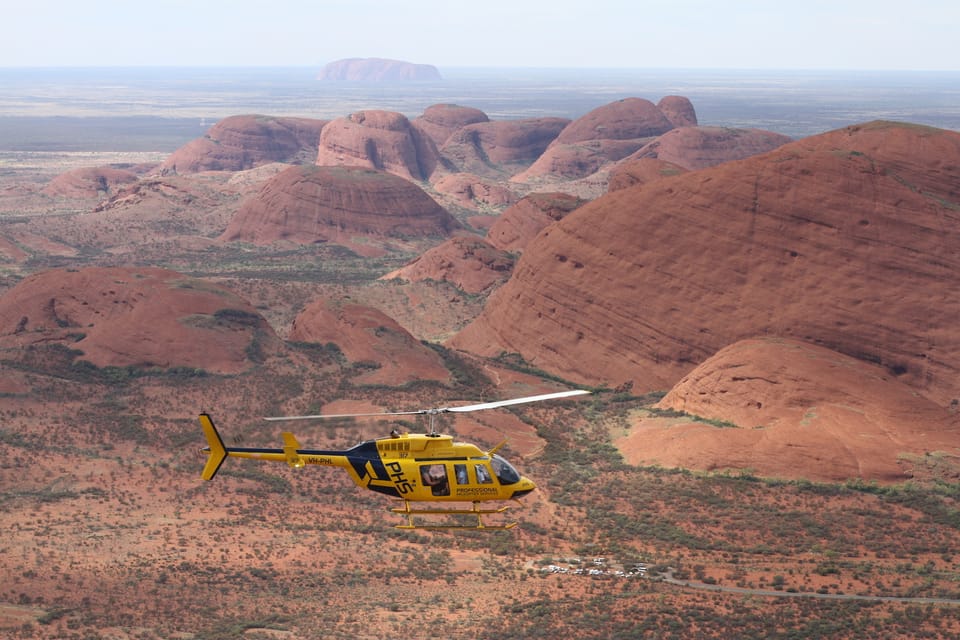
The resort shrinks below. Within two minutes Uluru fills the windscreen, its western face glowing rust-orange in the late light. You trace the scalloped base, noting the caves and waterholes the Anangu revere. The pilot arcs west, keeping the prescribed 500-foot clearance, and Kata Tjuta emerges—36 domes arrayed like a broken crown. The tallest, Walpa Gorge's flanking peak, catches the last direct sun. You photograph the ridges, the long shadows pooling in the valleys, the spinifex patterns stitched across the sand.
The return leg follows the southern dune corridor. The helicopter descends to 300 feet, low enough to see individual desert oaks and the tire tracks of 4WD vehicles threading between the dunes. The sun touches the horizon, Uluru now a silhouette backlit in violet. Three minutes later you touch down, rotors winding down as the ground crew waves you clear.
All the details about your upcoming adventure in one place
Uluru rises 348 metres above the surrounding plain, yet its visible mass represents only a fraction of the arkose sandstone bulk buried below. Geologists estimate the monolith extends another 2.
5 kilometres into the earth, the remnant of a mountain range laid down 550 million years ago and exhumed by millennia of erosion. The Anangu people have inhabited this landscape for more than 30,000 years, inscribing the rock with stories of creation ancestors whose journeys are still sung in ceremony today. Kata Tjuta, 25 kilometres west, comprises 36 domes of conglomerate rock, the tallest reaching 546 metres—higher than Uluru itself, though less celebrated.
The national park, jointly managed by Parks Australia and the traditional owners since the 1985 handback, now attracts more than 300,000 visitors annually. Most arrive between May and September, when daytime temperatures hold between 20 and 25 degrees Celsius and the low-angled winter sun sharpens the ochre striations visible in Uluru's western face. The Anangu closed the climb in October 2019, redirecting attention toward the base walks and the culturally endorsed viewing platforms. Helicopter operators fly under strict altitude and distance protocols established to protect sacred sites; rotorcraft must remain above 500 feet and are prohibited from circling directly overhead. These rules shape every aerial tour, channelling flights along approach corridors that privilege the southern and western exposures.
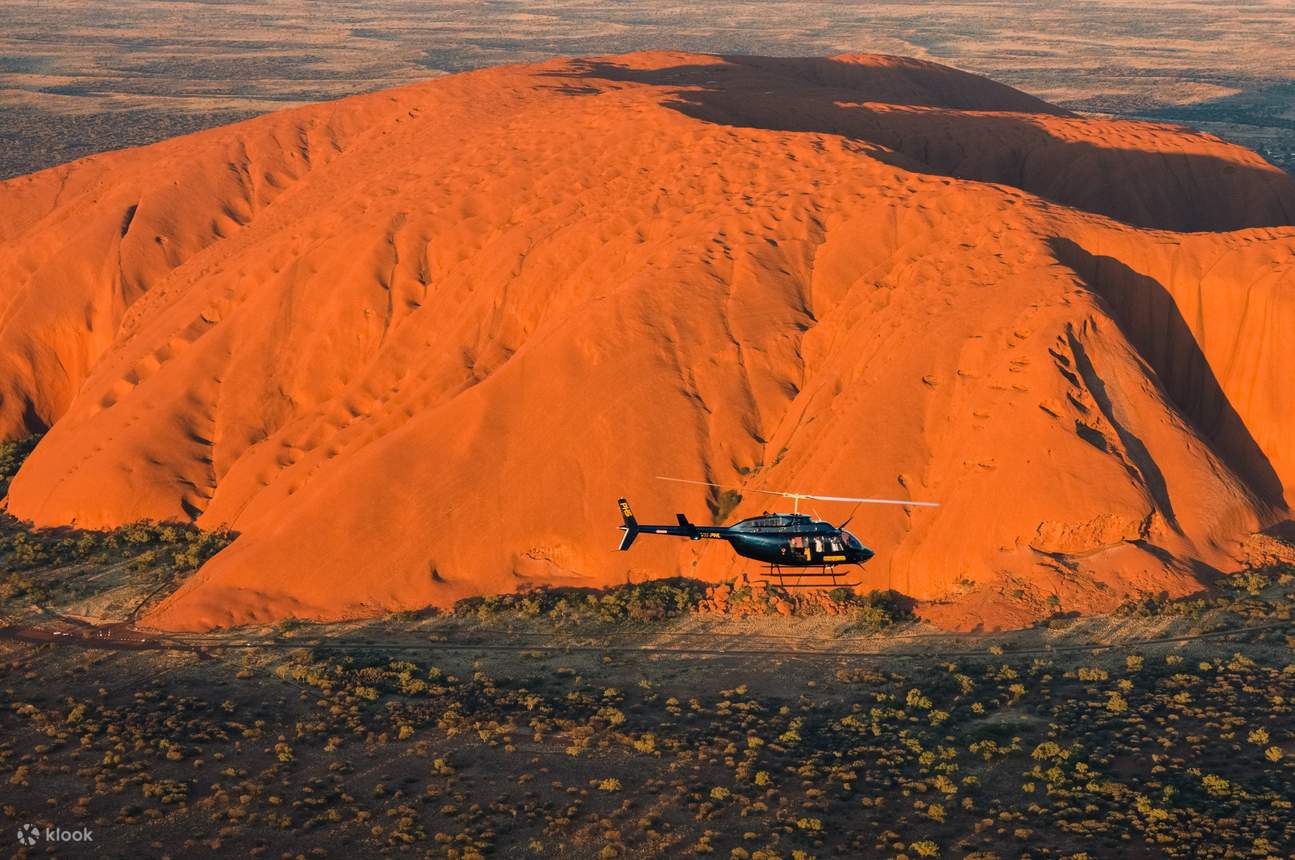
Sunset remains the most requested departure window. As the sun drops toward the horizon, Uluru's iron-rich surface shifts through a sequence of reds—from burnt sienna through vermilion to a final plum shadow. The phenomenon lasts 15 to 20 minutes, depending on cloud cover and dust in the atmosphere. Kata Tjuta, visible to the northwest, undergoes a parallel transformation, its domes glowing amber against the darkening plain. Pilots time the return leg to pass low over the sand dunes south of Yulara, where spinifex clumps and desert oaks cast long shadows across the rippled surface. The uluru sunset helicopter tour offerings span short 15-minute circuits and longer expeditions that include Kata Tjuta, with every operator departing from the airstrip adjacent to Ayers Rock Resort. Passengers are weighed before boarding to ensure rotor balance, and noise-cancelling headsets pipe in pilot commentary alongside a soundtrack of ambient instrumental music.
The broader Red Centre landscape—encompassing Kings Canyon, Mount Conner, and the salt pans of Lake Amadeus—stretches across 50,000 square kilometres of arid zone. Annual rainfall averages 308 millimetres, most falling in brief summer storms that trigger wildflower blooms and fill the ephemeral waterholes Anangu knowledge holders have navigated for generations.

Uluru's visible mass represents only a fraction of the arkose sandstone bulk buried below—geologists estimate the monolith extends another 2.5 kilometres into the earth.
Wear comfortable, flat-soled shoes suitable for boarding and disembarking the aircraft. Dress in layers as desert temperatures can drop rapidly after sunset.
Passengers are subject to weight requirements before boarding a uluru sunset helicopter tour. Large bags are not permitted inside the cabin.
Cameras and mobile devices are allowed for personal use during a uluru sunset helicopter tour. Keep all devices secure during flight.
Children must be accompanied by an adult. All passengers, including children, require their own seat on an aerial uluru sunset helicopter tour.
Assistance is provided for boarding the helicopter. Please notify the operator in advance regarding mobility needs for your uluru sunset helicopter tour.
Consumption of food and drinks is not permitted inside the helicopter. Carry water for your hydration before and after the flight.
Opening Hours
05:00–21:00
Address
Lasseter Hwy, Uluru NT 0872, Australia
Entry Fee
38 AUD (3-day park pass, per adult (18+))
Best Arrival
06:30–19:30
Baggage
Strict weight limits on helicopter
Location
Uluru-Kata Tjuta National Park
Car · Varies · Free parking on site
Follow Lasseter Hwy directly to the park entry gate.
Shuttle · 20 minutes · Fee applies
Resort shuttles operate from Yulara.
Cancellations must be made at least 24 hours in advance for a full refund. Bookings canceled within this window are non-refundable.
Recommended time
2 hours
For an uluru sunset helicopter tour, allow 30 minutes for pre-flight safety briefings and check-in procedures before your scheduled departure. While the aerial experience itself lasts between 15 and 30 minutes, securing uluru sunset helicopter tour tickets well in advance is recommended to ensure your preferred slot. Most guests find that arriving within the 06:30–19:30 best arrival window provides ample time to enjoy the changing colors of the desert landscape from the heliport. Visitors should consider that uluru sunset helicopter tour tours often experience higher demand as the light begins to shift toward dusk.
Crowd levels through the day
Weather · crowds · average price — dots go green to amber to red as each metric rises.
Mild temperatures and clear skies perfect for visibility during a uluru sunset helicopter tour.
Cool evenings and stable air conditions enhance the viewing experience.
Crisp, cool air provides sharp contrast for geological features.
Expect high heat during the day with occasional late afternoon storms.
Reserve your uluru sunset helicopter tour weeks in advance to secure sunset slots. High demand exists during peak months.
Wear light colors to reflect the sun if arriving early in the afternoon. Avoid loose scarves that may flap in rotor wash.
Always wait for the pilot to signal before approaching the helicopter. This ensures safety for all passengers.
Lasseter Hwy, Uluru NT
Follow signage to the designated flight desk
Get directionsUluru has drawn travelers for millennia, but its modern encounter with aerial tourism began in the 1950s when the Royal Australian Air Force conducted the first documented overflights. By 1958, charter operators from Alice Springs offered fixed-wing scenic flights, though landing restrictions and fuel costs kept passenger numbers modest. The 1970s brought Cessna 172s within reach of independent pilots, and sunset flights became a staple of the emerging Ayers Rock Resort infrastructure, though helicopters remained rare. In 1985, the Commonwealth returned title to the Anangu people, who immediately leased the land back to Parks Australia under strict conditions. Helicopter tours faced new scrutiny. The Uluru-Kata Tjuta National Park Board of Management, controlled by Anangu traditional owners, imposed altitude minimums and flight-path corridors to reduce noise over sacred sites. By 1992, only two operators held permits, and both were required to brief passengers on cultural protocols before departure. The uluru sunset helicopter tour model consolidated around 15-minute circuits departing Ayers Rock Resort, timed to the golden hour when the monolith shifts from ochre to crimson. Commercial pressure mounted through the 2000s as visitor numbers surged past 400,000 annually. In 2017, the Board voted to close the Uluru climb, effective October 2019, redirecting demand toward aerial experiences and ground-based walks. Helicopter tour tickets became a substitute for summit access, and operators expanded fleets to meet demand. Today, all uluru sunset helicopter tours operate under joint-management agreements, with Anangu monitors reviewing flight logs quarterly. The Park's 2025 sustainability audit confirmed that aircraft noise remains within prescribed limits, though debate continues over whether the experience honors or commercializes the landscape.
Charter operators begin fixed-wing scenic flights from Alice Springs to Ayers Rock.
Cessna overflights expand as Ayers Rock Resort opens, sunset circuits become standard.
Commonwealth returns Uluru title to Anangu traditional owners; flight restrictions tighten.
Helicopter permits limited to two operators under altitude and cultural-protocol rules.
Board votes to close Uluru climb, redirecting visitors to aerial and ground experiences.
Climb closure takes effect in October; helicopter tour demand rises sharply.
Sustainability audit confirms aircraft noise within limits under joint-management framework.
Position your camera to capture the contrast between the dark rock face and the surrounding desert scrub while orbiting the southern base. Ensure you focus on the vertical strata to emphasize the scale of the monolith.
This vantage point offers a geometric composition of the thirty-six steep-sided domes rising from the landscape. Use a faster shutter speed during your uluru sunset helicopter tour to maintain clarity as the chopper banks toward the formations.
Focus on the deep crevices and shadows between the rock formations which become highly pronounced as the sun dips low. This perspective highlights the jagged topography often missed from ground-level trails.
Shooting directly over the top provides a perspective of the sandstone texture and the vastness of the surrounding arid plains. Many visitors find that uluru sunset helicopter tour tours provide the only way to photograph the summit patterns clearly.
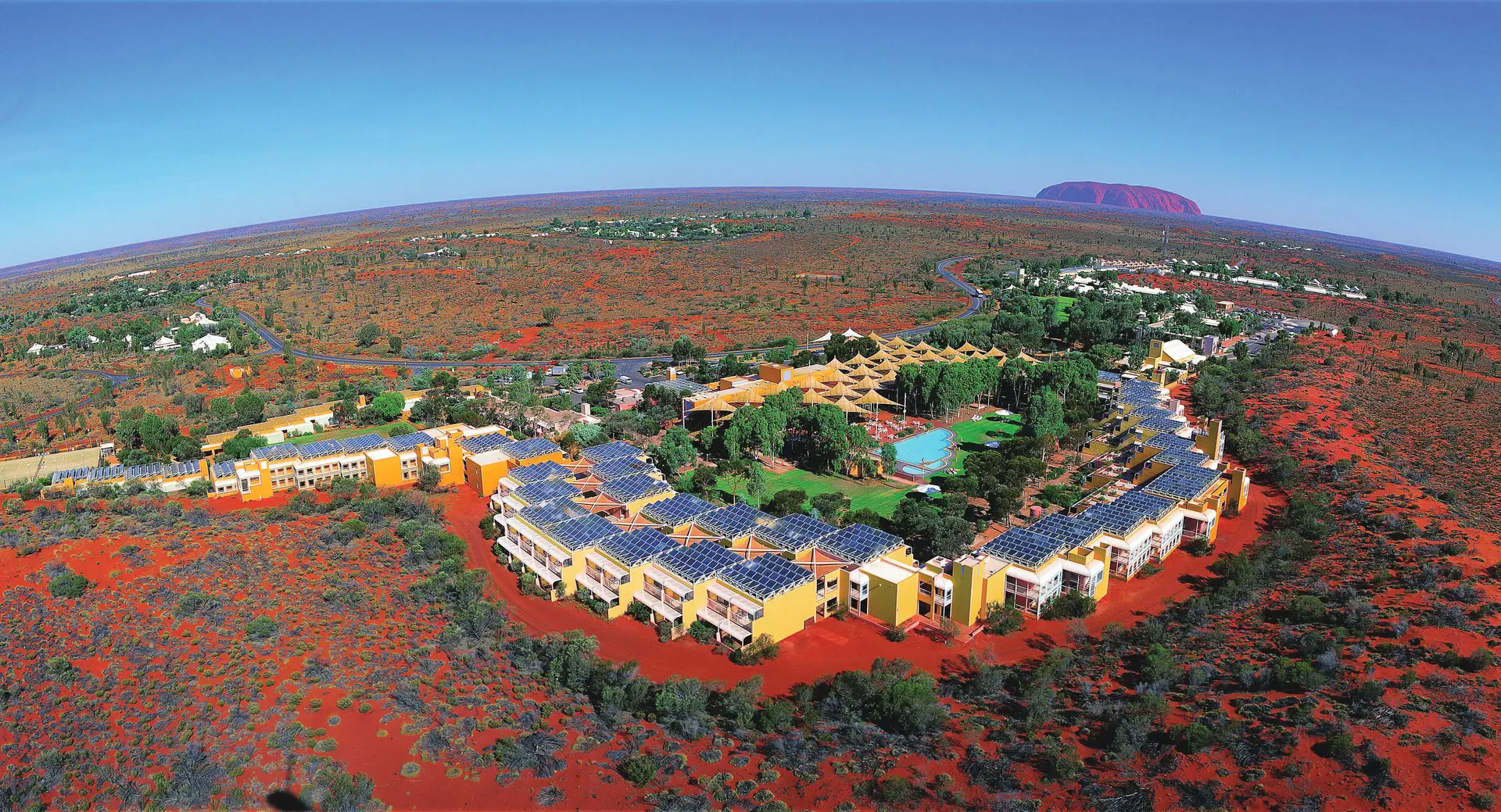
Align your shot to include the distant Cultural Centre against the base of the rock to establish perspective for your uluru sunset helicopter tour tickets imagery. The wide-angle lens works best here to capture the transition from sand to stone.
Taking an uluru sunset helicopter tour offers families a unique perspective of the landscape while keeping travel time minimal for young children. This aerial approach allows you to see the vast desert expanse without the physical strain of long desert hikes.
Helicopters have limited storage space, so collapsible strollers must be left at the departure lounge while you enjoy your uluru sunset helicopter tour tours. You should carry infants in a front pack or baby carrier for the duration of the flight and transfer to the aircraft.,Best Ages
Visitors planning a flight often dine at the nearby Ayers Rock Resort, which offers several convenient venues before or after your uluru sunset helicopter tour. These locations provide a range of dining experiences situated within a short drive of the departure point, perfect for finalizing your uluru sunset helicopter tour tour plans.
Specializes in Australian bush ingredients and flame-grilled meats. It is an excellent choice for a formal post-flight dinner.
Offers casual bites and beverages in a relaxed setting. This spot is ideal for those who have secured their uluru sunset helicopter tour tickets and need a quick meal before takeoff.
A training restaurant serving light breakfast and lunch options. Visit here for a simple, budget-friendly meal while waiting for your uluru sunset helicopter tour tours to depart.
Everything you need to know for your journey
The optimal arrival window for viewing is 06:30–19:30 to catch the changing colors. Sunset is the most popular time for a uluru sunset helicopter tour.
Children are welcome but must be accompanied by an adult, and all passengers require a ticket for a uluru sunset helicopter tour seat.
Most tours are designed for a 30-minute aerial experience. Confirm exact duration on your specific uluru sunset helicopter tour booking.
Large bags are restricted for safety reasons. Carry only essentials for your uluru sunset helicopter tour.
Yes, a valid 38 AUD 3-day park pass is required for all visitors entering the national park.
Yes, you are encouraged to take photos during your uluru sunset helicopter tour. Keep cameras secure at all times.
Flights are weather-dependent and will be rescheduled or refunded if cancelled by the operator.
Contact the operator directly regarding group bookings for your uluru sunset helicopter tour.
The heliport is located via Lasseter Hwy; follow local signage within the park or resort area.
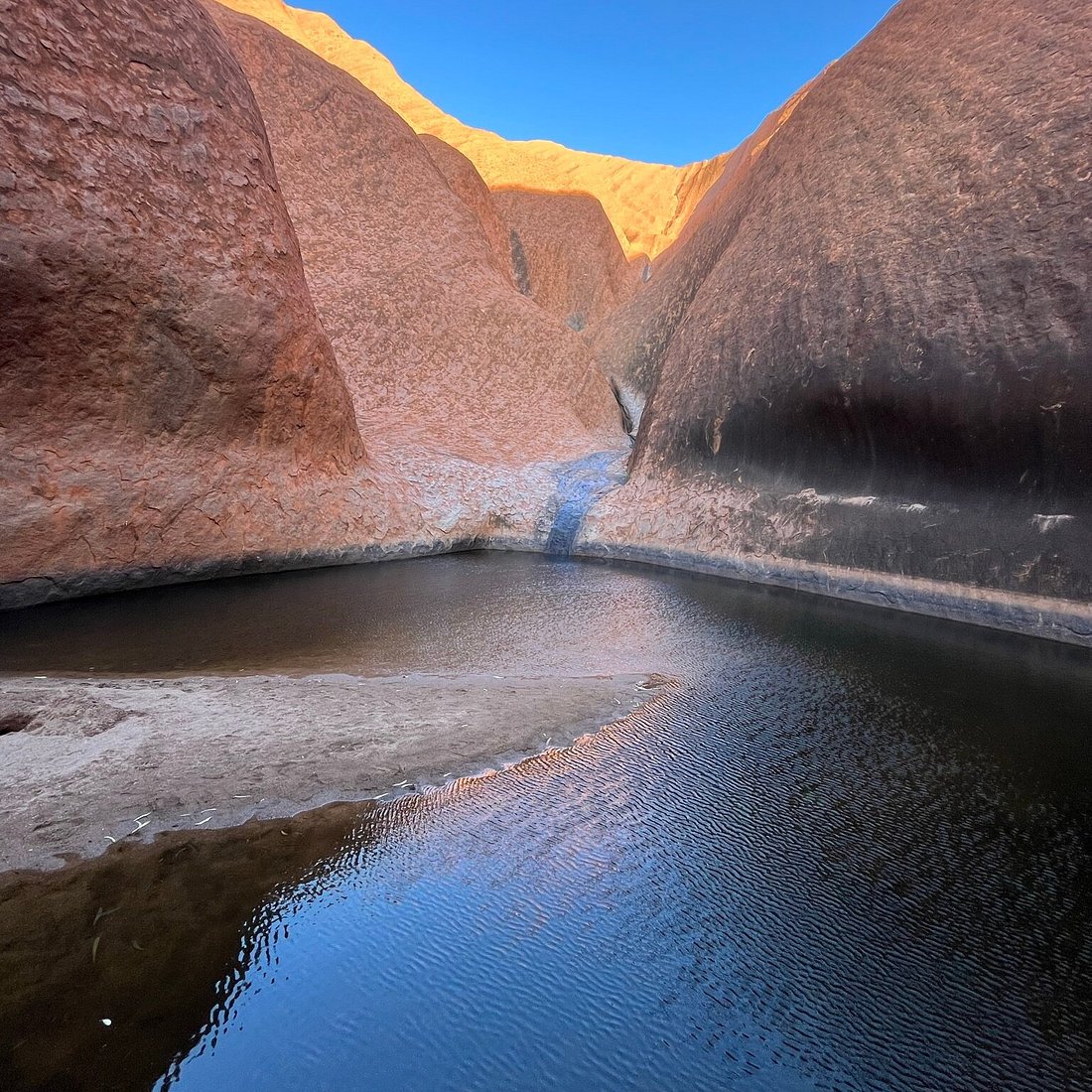
A significant water source located at the base of Uluru. It features ancient rock art and desert vegetation.
A short path leading to a rock art site and waterhole. It provides a close-up perspective of the monolith base.
Centrally located hotel with views of the park.
Practical accommodation options for park visitors.
Join thousands of happy travelers who have discovered this incredible experience
Book Your Experience Now